A Fraction of a Second: The Making of a Winning Shot
When you purchase through links on our site, we may earn an affiliate commission at no additional cost to you. If you want to find out how this works: [Read More Here]
Competitions and Why This Winning Shot Rose Above the Rest
Before we get into the whys and wherefores of this being a winning shot let’s talk about competitions.
I’ve always thought local photo competitions get far less credit than they deserve. What gets talked about in the photographic press are the big international showcases. You know… the ones with six-figure prizes and headlines attached.
And yet there are local competitions that get overlooked all the time and that shouldn’t be the way. The photographic press forgets that most photographers’ real growth happens somewhere smaller and closer to home.
A local competition is often the first place someone hands their work to strangers and waits to hear what they think. And it was in a local competition that I came across Carlie Haben’s winning photograph.
Having a love for animals the specific category she wanted to enter was “Pets.” Accordingly, she’d taken dozens of photos of dogs in a park that afternoon, and one of them ended up winning. Or, more accurately, one won and her other entry came second. No small achievement!
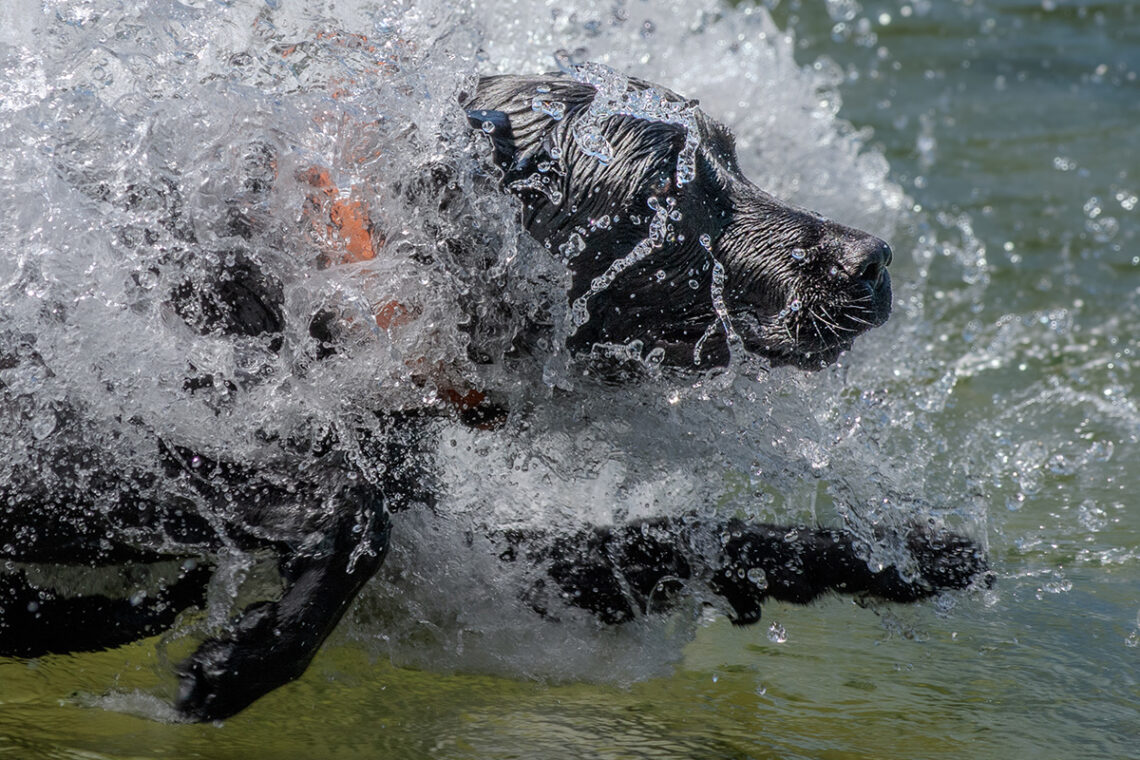
But the winning photograph? It was easy to see why it won!
And now, let’s meet our winning photographer!
Carlie Haben: The Making of a Photographer
I interviewed Carlie and asked about the how and why that got her into photography. This is what she had to say:
I first started photography around middle school age, I’d take my Kodak EasyShare and have photo shoots with my pet bunny. In high school I was a part of the photography club/class where I first started studio work and learned Photoshop.
It was my freshman year of college, however, when I really got into it. I didn’t really fit into the college scene so I bought myself a Nikon D3200 from Facebook Marketplace and began going on hikes with it to escape campus.
After college I bought my first house and needed money to pay for repairs so I started my local photography business offering family and senior portraits in parks around town. This is where I learned I really enjoyed nature photography.
It wasn’t until more recently when I saw a video on TikTok about people still shooting 35mm film, that sparked something in me and I went to eBay and bought my first film camera, a Pentax Spotmatic.
The moment my scans came back I was hooked. Then began my passion for collecting vintage cameras. I have learned there are two ways people look at you for collecting film cameras: either you are looked at like you are completely nuts and told to “Just use your iPhone to take pictures,” or someone is grateful that their dad’s or mom’s camera is still being appreciated and used.
Either of which response I love. My collection is now up to around 30 vintage film cameras and two DSLRS.
Having met Carlie let’s go on and talk about her photograph.
Why This Photograph Is a Winner
What makes this photograph particularly strong is that it combines a very clear subject with an unusually complex moment. Is it simply a dog running through water? In some ways yes it is but in all other ways it is no. It is so much more! Just about every part of this photograph reinforces the impression of speed and movement.
The Captured Moment Is Excellent
The dog is caught at exactly the right point in its movement. A fraction of a second earlier or later might well have resulted in a less compelling shot. Instead, its head is clearly visible and forward-facing, while the body and legs are partly disappear into the frozen spray droplets.
The Water Isn’t Just a Part of the Background but a Major Part of the Composition
In my opinion this is one of the photograph’s greatest strengths. The spray surrounds the dog and even though it partially conceals the dog’s body it does not conceal the dog’s head.
The water is frozen sharply which adds enormously to the visual texture. There is something for the eye to examine throughout the entire frame.
The Dog’s Head Is Exceptionally Well Placed
The head is placed toward the right-hand side, looking into the remaining space. That’s important! There is substantial open water ahead of the dog’s nose, so the photograph doesn’t feel as though the animal is running into the edge of the frame.
For most photographers it is tempting to fill the frame with the subject but for this particular shot that would have been a mistake. That space gives the photograph a very definite visual direction.
The Black Dog Against the Silver/White Water Creates Separation
The tonal relationship is wonderful. The subject is predominantly very dark while the water is predominantly very light. It’s as though the dog is silhouetted even though much of its body is obscured.
More importantly, Carlie hasn’t simply exposed for the black dog and lost the water and there is much detail in both.
That tonal control is particularly important in an image containing both black fur and highly reflective water.
There Is Tremendous Texture
This is an image that rewards looking at it rather than merely recognizing it.
It’s all there! Wet fur; individual hairs; transparent water droplets; larger sheets of water; bubbles; splashes; reflections; and the rippled surface underneath.
That combination gives the photograph an almost tactile quality. You so nearly get a sense of what the water feels like.
The Shutter Speed is Purposeful
This is a technically sharp photograph. And that sharpness freezes the water into discrete forms as well as capturing the movement of the dog.
Despite freezing the moment the photograph still communicates rapid motion. That’s an important point to remember. A photograph can be technically sharp and still look static. This one is not only sharp but feels extremely dynamic.
The Orange Element Is Surprisingly Useful!
There is an orange collar behind the spray. It’s obscured for sure, but what’s actually visible works to improve the picture as it introduces a small amount of warm color into an otherwise predominantly black, white, gray and blue-green image.
The Cropping Shows Confidence
The photographer hasn’t tried to show the entire dog and that’s a very important choice.
The rear of the animal is effectively lost into the left side of the frame and the legs extend toward the bottom. Ordinarily, cutting off parts of an animal could be considered a flaw. Here, however, it communicates proximity and movement.
Consequently, the image has an immediacy that’s almost palpable. Yes, I know I’m waxing lyrical, but that doesn’t make it any less true!
There Is Controlled Chaos
This is perhaps the most fundamental reason of all even though I have left it till last that this photograph works so very well.
It looks chaotic at first glance for sure. There is water everywhere, limbs everywhere, droplets everywhere.
But the photograph actually has a very strong hierarchy:
- Dog’s head
- Dog’s body
- Splash and movement
- Background water
That hierarchy is what separates it from being merely another dog playing in water photograph. Chaos it is but that chaos is organized around a very clear visual subject.
Why it works particularly well as a competition photograph is this: A competition image generally has to survive a very quick first impression. This one does.
A dark animal, an enormous splash, a recognizable head, and obvious movement. That’s the photograph in a nutshell. But then, when you look closer, more information emerges.
That’s one of the most important characteristics a competition photograph can have. The initial impression hooks you and then a closer examination reels you in.
It’s very easy to take an action photograph that freezes the action. It really is! And the Internet is full of them. But for the most part they are boring. This photograph avoids that pitfall and instead is visually compelling.
The most important thing though? I would argue that the photograph’s greatest achievement is the balance between concealment and revealment. Okay, I know that word is old-fashioned so I’ll go with revelation. It’s about as close to perfect as you can get.
Technical Details
As photographers we are always interested in what was used for a particular shot so here’s the EXIF Pilot readout for the winning shot.
Camera: Nikon D5200
Lens: Nikon AF-S DX Nikkor 55-200mm f/4-5.6G
Shutter Speed: 1/1600
Aperture: 7.1
Focal Length: 102mm (35mm equivalent)
ISO: 400
So, What Separates a Good Shot from a Winning One?
Well, having gone through the nuts and bolts of what makes Carlie’s photograph a winner, where does that leave us with regard to what makes a competition winning photograph a winner?
What I can tell you is that it is not always the one containing the most action. It isn’t always the most dramatic subject either. Nor is it the most technically difficult moment to capture.
Instead, a competition winner is the photograph in which timing, composition, subject, light, texture and emotion all happen to align within the same frame.
When that happens it is a picture that remains memorable long after it has been seen.
And Just as a Side Note….
Carlie not only won the competition but one of her other photographs came second. First and second is definitely something to be proud of!
Below you can see the two photographs and compare them for yourself.
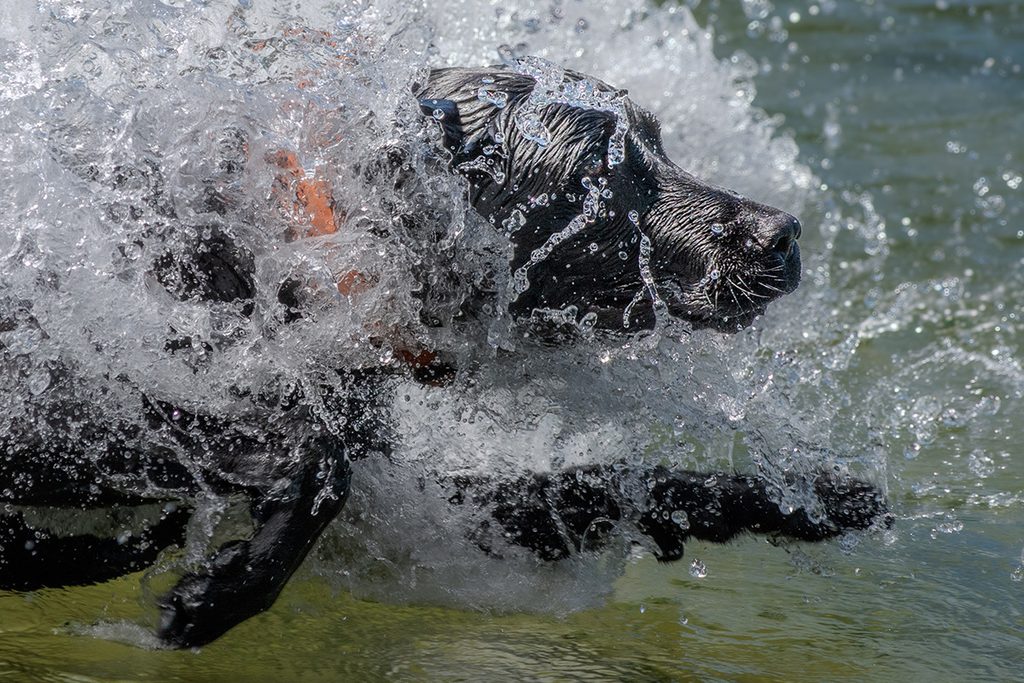
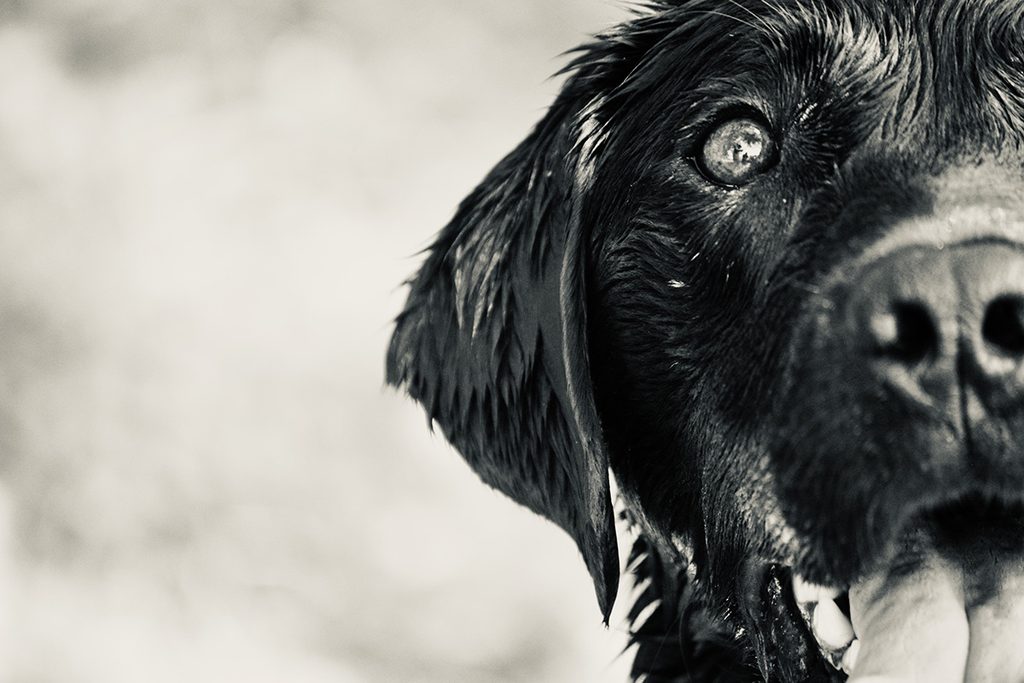
Click either photograph to view it in our lightbox.

You May Also Like

Nikon Joins Competitors in Raising U.S. Prices Due to Tariffs
Using 22 Year-Old Expired B&W Film