Powering Vintage Cameras with Modern Batteries
When you purchase through links on our site, we may earn an affiliate commission at no additional cost to you. If you want to find out how this works: [Read More Here]
The Challenge of Powering Vintage Cameras
For photographers like myself who like to use classic cameras from the 1960s, 1970s, and even the 1980’s, there is one major obstacle that stands in the way of easy operation. And that obstacle? Mercury batteries!
Many great and even iconic film cameras, including models as the Olympus OM-1, Minolta SRT series, Canon FTb, and Pentax Spotmatic, were designed to use mercury oxide batteries like the PX625, PX400, PX675, PX32, and PX640.
These batteries did a great job because of their ability to maintain a constant voltage of 1.35V until the very end of their life. The reason this was so important was that it allowed manufacturers to design simple but effective exposure meters without complex, expensive voltage regulation circuitry.
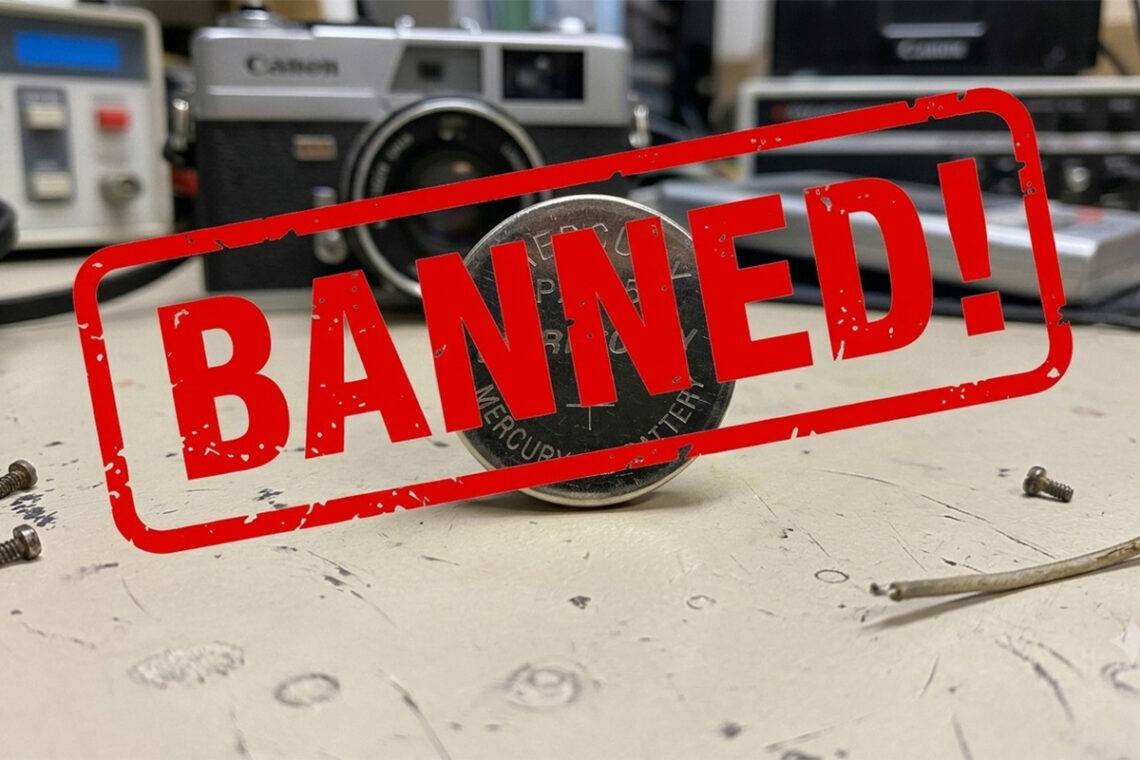
Fortunately, or unfortunately, depending on how you look at it mercury batteries are no longer manufactured or sold in most countries due to the highly toxic nature of mercury. Mercury does pose a significant environmental hazard for sure.
The long and short of it is that this leaves photographers with the problem of finding a suitable replacement.
The Batteries and Their Replacements
The fundamental problem with modern batteries is their voltage. Alkaline and silver oxide batteries, which are readily available, produce a nominal 1.5V, which is higher than the 1.35V that vintage meters expect.
This voltage difference is enough to cause inaccurate meter readings and, as a result, incorrect exposures. Even then it’s not straightforward as the problem is sometimes exacerbated by the discharge curve of these more modern batteries.
Unlike the original mercury cells of that era, an alkaline battery’s voltage drops as it depletes, meaning the exposure error will change over time. That makes it difficult if not impossible to compensate for with a simple, fixed adjustment.
There are, however, several effective solutions that exist. One popular option is the Wein Cell, a direct, drop-in replacement that uses zinc-air technology to provide a stable 1.35V. Great right? Well, yes and no.
Not only are these significantly more expensive than standard batteries, but cells have a limited lifespan of just a few months once activated by removing their seal, as they rely on oxygen to function. Now it is possible to extend this usable life by removing and resealing them but it’s rather a PITA doing so.
One other possibility is to use a 1.4V zinc-air hearing aid battery (Size 675) with a rubber O-ring spacer, but these too don’t last very long but on the plus side they are significantly cheaper.
A more permanent and cost-effective solution is to use a battery adapter with a built-in voltage-regulating diode, such as the MR-9 adapter plus others, which allows a common 1.5V silver oxide battery to output the correct 1.35V. These are not cheap but they will pay for themselves very quickly.
Some cameras, particularly those with bridge circuits like the original Pentax Spotmatic series, are much easier to deal with as they are immune to this voltage variance. They can use 1.5V silver oxide batteries without any issue, but this is far from true for all cameras.
With No Adapter and a 1.5V Battery Exposure Compensation Is Needed
If you decide to use a 1.5V silver-oxide or alkaline battery in a camera without a regulating circuit or an adapter what you will need to do is adjust the ISO/ASA dial – it’s usually ASA on vintage cameras.
It’s a compromise of course but it is a necessary one. Because the higher voltage fools the meter into overestimating the available light, you need to fool the camera into making a longer exposure.
To achieve this, you should lower the ISO setting on your camera. Doing so means you are telling the meter that your film is less sensitive to light than it actually is. As a result the meter will now recommend a slower shutter speed or a wider aperture to compensate. What this effectively does is to overexpose the film which cancels out the meter’s initial underexposure.
A rough guide is this:
ISO 100 film – set the dial to 50.
ISO 200 film – set the dial to 100.
ISO 400 film – set the dial to 200.
And the Caveats!
Because of course there are! This rule of thumb, however, comes with two major caveats that you should be aware of. First off, it assumes the voltage difference creates a never changing one-stop error, which is definitely not always true.
Secondly, and somewhat more importantly, this method can be very unreliable with alkaline batteries. The reason being because their voltage drops steadily as they drain, the amount of exposure error will shift over the battery’s life. In other words a compensation that works today may well be wrong next week.
If you decide not to use Wein cells then go for silver oxide rather than alkaline. Choose an SR44 (for example) and not an LR44. They are the same size and deliver the same initial voltage but they are not equal!
Vintage Cameras with Modern Batteries Can Still Work
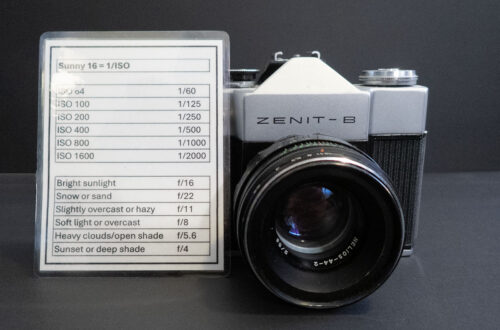
Of course, it is quite feasible not to bother with a battery at all if it is only needed for metering. Fully mechanical cameras give you that option and there are still good light meters available. And there is always the “Sunny 16 Rule” if necessary.
Personally, I prefer to try and find a method that works best for me. Most of the film cameras I have used to use PX625 batteries so I have invested in a few adapters which does make life easier.
C.R.I.S. makes an adapter the MR-9 which at the time of writing is sold out. Hopefully, that will change. One word of warning here: There are numerous listings all over the Internet for MR-9s and all they are are brass (usually but not always) size adapters. There is no electronic circuitry to reduce voltage! Avoid like the plague if you need voltage reduction.
In the meantime I did find a cheaper, albeit less pretty, option on eBay. I currently have a couple of these on order and will test them out once they arrive.
Whichever way you decide to go voltage adapter, 1.5V with no adapter, separate light meter (you can get light meter apps for your phone!), or just use Sunny16, get out there and use your camera! Some of the best film cameras ever made can be picked up for a song nowadays.


You May Also Like

Using 22 Year-Old Expired B&W Film
How to Find the Shutter Count on an Olympus OM-D E-M1 II